
Ancient Predator Found in Garden Wall
A remarkable piece of prehistoric history was hiding in plain sight for decades, tucked away in a common garden retaining wall in Australia. Scientists recently confirmed that a fossilized skeleton embedded in the stone belongs to a previously unknown species of giant amphibian, dating back 240 million years. The creature, now named Arenaerpeton supinatus, offers a rare glimpse into the life of a predator that roamed the Earth long before the dinosaurs dominated the landscape.
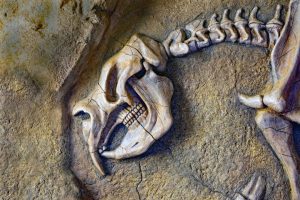
The discovery began when a homeowner noticed something unusual about the rocks used in their garden wall. What appeared to be mere decorative stone was actually a near-complete skeleton of an ancient river dweller. Paleontologists who examined the specimen were stunned to find not only the bones but also rare impressions of the animal’s skin, providing researchers with a clearer picture of how this creature lived and moved.
A Fearsome River Predator
Measuring roughly 1.2 meters in length, Arenaerpeton supinatus was a formidable presence in the freshwater rivers of the Triassic period. Physically, it resembled a modern-day salamander, though it was significantly bulkier and far more aggressive. Its jaw was lined with sharp, fang-like teeth, which experts believe were perfectly adapted for snatching slippery prey from the water.
The preservation of the skin is what makes this find truly significant. In most fossilization processes, soft tissues decay long before they can be turned into stone. Finding these traces allows scientists to understand the texture and physical characteristics of these ancient amphibians that skeletal remains alone could never reveal. This discovery highlights the immense biological diversity that existed on Earth millions of years ago, long before the rise of modern mammals.
The creature lived during a time of great geological shifts. The Triassic period was a transformative era for the planet, marking the recovery of life after the massive extinction event that occurred at the end of the Permian period. Discoveries like this help researchers piece together how ecosystems rebuilt themselves and how predators adapted to their changing environments.
This find also serves as a reminder that history is often buried right beneath our feet. While many major paleontological discoveries happen in remote deserts or deep excavations, this specimen spent years acting as a structural piece of a backyard wall. It highlights the importance of public awareness; sometimes, the most significant scientific breakthroughs come from the curiosity of everyday people who take a closer look at the world around them. As experts continue to study the fossil, they hope to learn more about the creature’s diet, its environment, and why such a successful predator eventually vanished from the fossil record.