Ancient Fossil Reveals Origins of Land Breathing
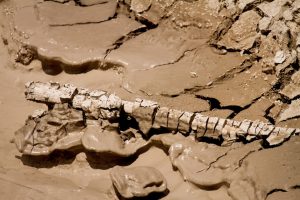
Paleontologists have uncovered a remarkable window into the past with the discovery of a 289-million-year-old mummified reptile known as Captorhinus aguti. This tiny, ancient creature, found in a state of near-perfect preservation, is fundamentally changing how scientists understand the transition of vertebrate life from aquatic environments to dry land. The specimen offers the earliest evidence of costal ventilation—the rib-powered breathing mechanism that modern reptiles, birds, and mammals rely on today.
For decades, researchers have debated exactly how early land-dwelling animals managed the physiological shift required to survive outside of water. While amphibians typically rely on a primitive “buccal pumping” method—essentially swallowing air—this fossil confirms that Captorhinus aguti possessed a more sophisticated rib cage structure. This adaptation allowed the animal to expand its chest cavity, creating a vacuum that pulled air into the lungs. This transition was a critical milestone in evolutionary history, enabling vertebrates to grow larger, become more active, and eventually colonize the diverse ecosystems of the Earth.
A Masterclass in Biological Engineering
The level of detail preserved in this mummified specimen is rare for the fossil record. Usually, soft tissues decay long before fossilization can occur, leaving behind only bones. In this instance, the unique environmental conditions at the time of the creature’s death acted as a natural preservative. By studying the orientation and articulation of the rib cage, scientists have been able to map the musculature that supported these early breathing efforts.
This discovery highlights the complex design inherent in biological organisms. The shift to rib-based respiration was not merely a minor change; it was a necessary innovation for life to thrive in oxygen-rich land environments. Without the ability to efficiently exchange gases through chest expansion, early vertebrates would have been strictly limited to the water’s edge. This fossil provides the missing link in the anatomical timeline, demonstrating that even millions of years ago, life was equipped with the precise mechanical tools needed to adapt to a changing world.
As researchers continue to analyze the specimen, the broader implications for evolutionary biology remain clear. The ability to breathe effectively on land paved the way for the vast diversity of life that would follow. By looking back at this small reptile, scientists are gaining a deeper appreciation for the intricate, functional designs that have sustained living creatures for nearly 300 million years. This discovery underscores the importance of the fossil record in documenting the foundational innovations that allowed vertebrates to master the terrestrial landscape.