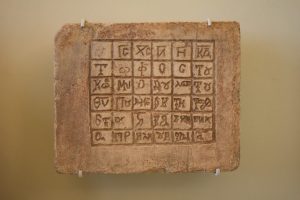

Ancient Manuscript Discovered in Rome Holds First English Poem
Archaeologists and historians are celebrating a remarkable find in Rome this week after a long-lost manuscript surfaced, containing one of the earliest known versions of the first poem written in the English language. This 1,200-year-old text, which had been missing for decades and was feared destroyed, offers a rare window into the dawn of English literature.
The manuscript features “Caedmon’s Hymn,” a short, nine-line work of Old English verse. According to historical tradition, the poem was not the product of a trained scholar or a prestigious poet, but rather a humble Northumbrian cowherd named Caedmon. As the story goes, Caedmon was a shy man who lacked the skill to sing or recite poetry until he experienced a miraculous, divine dream. Upon waking, he discovered he could compose beautiful verses praising the Creator, a gift that would eventually mark the beginning of English poetic tradition.
The Significance of a Lost Literary Treasure
For decades, scholars believed this specific copy of the manuscript was lost to time. Its discovery in a Roman collection provides researchers with a vital link to the 8th century, a period when the English language was still in its infancy. By analyzing the script and the parchment, experts can better understand how these early Christian hymns were transcribed and preserved by monks across Europe.
The hymn itself is a testament to the power of faith during the Middle Ages. In a time when Latin was the dominant language of the Church and the educated elite, Caedmon’s decision to compose in the common tongue—Old English—was a revolutionary act. It bridged the gap between the divine and the everyday worker, proving that the English language was capable of expressing profound spiritual truths.
This discovery highlights the importance of preserving historical artifacts. Too often, ancient documents are neglected or forgotten, yet they hold the keys to understanding our cultural and linguistic heritage. As modern technology aids in the restoration and digitization of such finds, we gain a clearer picture of how our ancestors lived, thought, and expressed their devotion.
The manuscript is currently undergoing further analysis to ensure its long-term preservation. For those who value the preservation of history, this find serves as a reminder that the written word remains one of our most enduring legacies. It is a profound connection to a simpler time, when a cowherd’s dream could spark a literary movement that would eventually span the globe.