
Ancient Twisted-Jaw Creature Found in Brazil
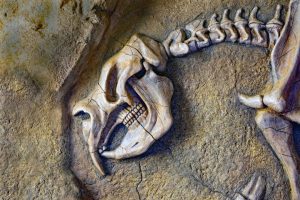
Paleontologists working in the arid landscapes of Brazil have unearthed the remains of a prehistoric animal that defies conventional evolutionary logic. The creature, formally dubbed Tanyka amnicola, lived approximately 275 million years ago, long before the age of the dinosaurs. Found preserved within the sediment of an ancient, dried-up riverbed, the fossil features a uniquely twisted jaw structure that has left researchers stunned by its complexity and anatomical strangeness.
This discovery provides a rare window into the Permian period, a time of great environmental transition on Earth. While many species from this era followed predictable evolutionary paths, Tanyka amnicola appears to have been an outlier. Its jaw, which displays a distinct asymmetry, suggests a highly specialized feeding method that remains unseen in any modern animal. Scientists are currently debating whether this feature was an adaptation for reaching into narrow rock crevices or a specialized tool for harvesting unique aquatic vegetation.
A Living Fossil Defying Time
Perhaps the most intriguing aspect of this find is the creature’s status as a biological “living fossil.” According to the research team, Tanyka amnicola belonged to a lineage that should have technically been extinct by the time it was alive. Its presence in the fossil record suggests that small, isolated populations of archaic animals managed to survive in hidden pockets of the world, persisting long after their ancestors had vanished from the broader landscape.
This discovery highlights the gaps in our current understanding of the prehistoric world. Evolution is rarely a straight line; instead, it is a complex web of survival and adaptation. By studying how Tanyka amnicola managed to endure while its peers faded into history, scientists hope to gain better insights into the resilience of life under extreme environmental pressures. The fossil is currently undergoing high-resolution CT scanning to map the interior structure of the jaw, which will allow experts to create digital models of how the animal functioned in its natural habitat.
As excavation continues in the region, researchers expect to find more pieces of this ancient ecosystem. The Brazilian riverbed has proven to be a treasure trove, demonstrating that even hundreds of millions of years later, the Earth still holds profound secrets about the origins and diversity of life. Each new fossil serves as a reminder of the intricate design and biological variety that has characterized our planet’s long and storied history.